What Is A Solar Inverter And How Does It Work?
What Is A Solar Inverter And How Does It Work?
Solar power systems harness the sun's energy, but the electricity generated by solar panels isn't immediately usable by most homes, businesses, or the grid. This is where the solar inverter – the indispensable core component of any photovoltaic (PV) system – performs its critical function.
1. Defining the Solar Inverter
A solar inverter is an electronic device specifically designed to convert the Direct Current (DC) electricity produced by solar panels (photovoltaic modules) into Alternating Current (AC) electricity. This AC electricity is the standard form required to power household appliances, commercial equipment, and to be fed into the utility grid.
2. Core Function: DC to AC Conversion
The primary and most fundamental task of any solar inverter is this DC-to-AC conversion. Without it, the energy captured by the panels cannot be utilized by standard electrical devices or integrated with the public electricity network.
3. How a Solar Inverter Works: Key Stages
While specific designs vary (e.g., String Inverters, Central Inverters, Microinverters), the core operational principles involve these key stages:
- DC Input Collection:
Solar panels generate DC electricity through the photovoltaic effect.The voltage and current of this DC output fluctuate with sunlight intensity, temperature, and shading. Multiple panels are typically connected in series ("strings") or parallel to form an array, generating highe voltage/current DC (e.g., hundreds of volts).
- Maximum Power Point Tracking (MPPT):
Core Function: Solar panel output varies constantly. The inverter's MPPT system continuously monitors the array's voltage and current.
Action: It dynamically adjusts the electrical operating point (load) of the panels to ensure they are always operating at their maximum possible power output (the "Maximum Power Point"), even under partial shading or changing weather conditions. This is typically achieved using sophisticated DC-DC conversion circuitry.
Benefit: Maximizes energy harvest from the solar array, significantly increasing overall system efficiency.
- DC to AC Conversion (Inversion):
The Heart of the Process: This stage uses power electronics, commonly Insulated-Gate Bipolar Transistors (IGBTs) or similar semiconductors.
- Key Techniques:
High-Frequency Switching: The semiconductor devices switch on and off thousands of times per second, effectively "chopping" the DC input into a series of pulses.
Waveform Synthesis & Filtering: These pulses are then shaped and filtered (using inductors and capacitors) into a smooth, pure sine wave that matches the required grid or load specifications (e.g., 120V/240V, 50Hz/60Hz).
- DC Output & Grid Interaction (If Applicable):
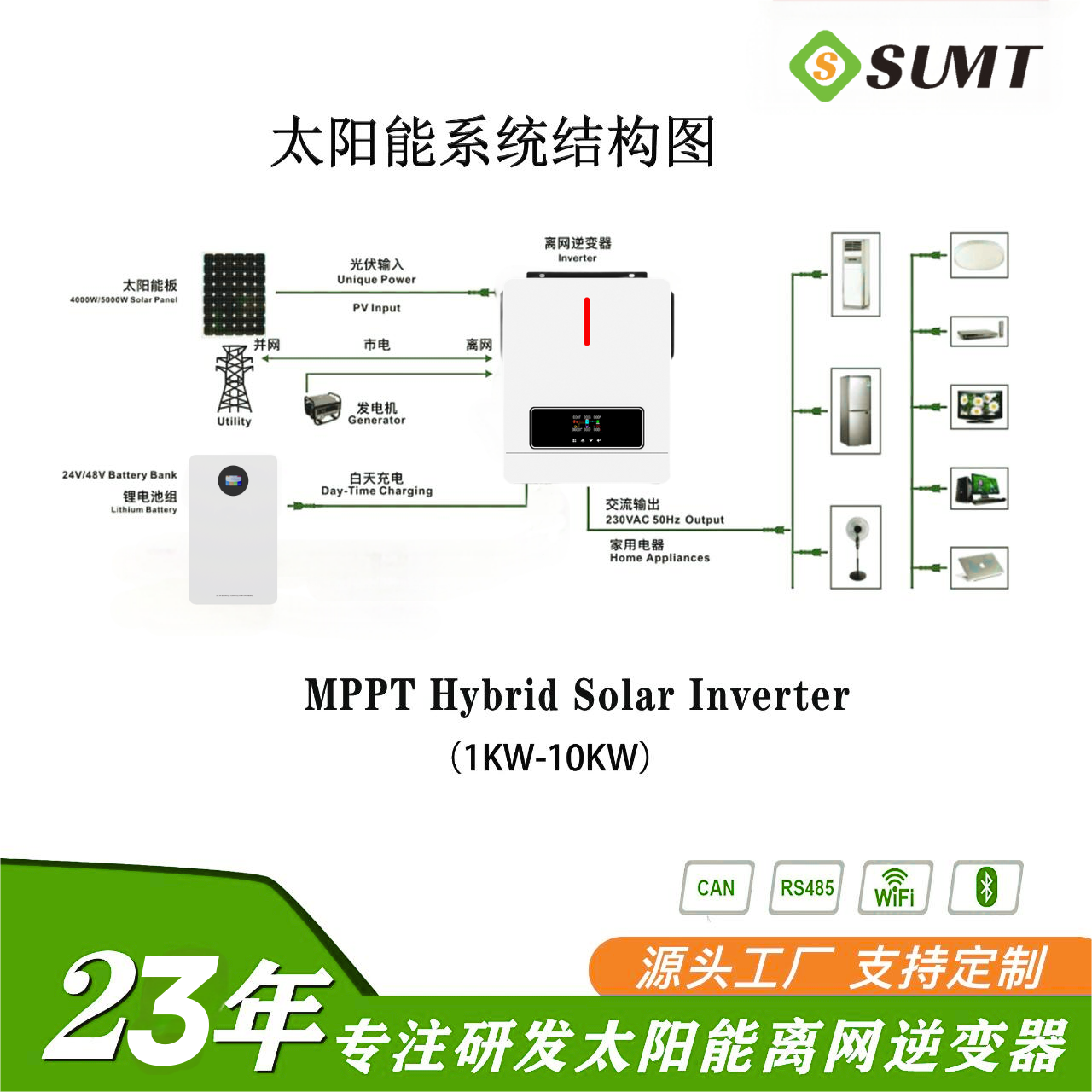
Off-Grid Systems: The generated AC power is directly supplied to local loads (appliances) or used to charge battery banks for energy storage.
Grid-Tied Systems:
Synchronization: Using technologies like Phase-Locked Loops (PLL), the inverter meticulously synchronizes its output AC waveform's frequency, phase, and voltage with the utility grid.
Safe Connection: This precise synchronization is critical for safe and stable connection to the grid.
Export: When the solar system produces more power than the local load consumes, the excess AC electricity can be fed back ("exported") to the utility grid, subject to local regulations and net metering policies ("feed-in").
- Protection & Monitoring:
Safety First: Inverters incorporate comprehensive protection against faults like overloads, short circuits, over/under-voltage, over-temperature, and ground faults.
System Intelligence: Integrated sensors and communication modules (e.g., RS485, Wi-Fi, Ethernet) constantly monitor performance metrics (voltage, current, power, energy production, temperature). This data is accessible locally (displays) or remotely via monitoring platforms/cloud services, enabling users and installers to track system health, performance, and efficiency.
4. The Critical Importance of the Solar Inverter
The inverter is far more than just a converter; its performance directly dictates the success of the entire solar investment:
- Efficiency = Energy Yield: Modern high-quality inverters boast conversion efficiencies exceeding 97-99%. Even a 1% gain in inverter efficiency can translate to a 1-3% increase in annual energy harvest.
- Grid Compatibility & Stability: Grid-tied inverters must strictly comply with complex international and local grid codes (e.g., UL 1741, IEC 62109, VDE-AR-N 4105). They ensure power quality (low harmonic distortion) and provide essential grid support functions like Low Voltage Ride-Through (LVRT), maintaining grid stability.
- Reliability & Longevity: Designed for harsh outdoor environments, robust inverters feature high ingress protection (IP) ratings (e.g., IP65) and wide operating temperature ranges. Lifespans of 10-20 years are standard expectations, underpinning the long-term viability of the PV system.
In essence, the solar inverter is the intelligent "brain" and "translator" of the PV system, transforming raw solar DC power into usable, synchronized AC power while maximizing harvest, ensuring safety, and enabling grid interaction.
5.About Shenzhen Smart Power Technology Co., Ltd.
Smart Power is a leading manufacturer specializing in high-performance solar power conversion and energy storage solutions. With over 10+ years of dedicated expertise in the off-grid and hybrid inverter segment, we have established ourselves as a trusted innovator.
- Core Product Portfolio: Solar Inverters (Off-Grid, Hybrid), Lithium Batteries, Solar Charge Controllers, Complete Solar Kits & Systems.
- Commitment to Innovation: Driven by 2 dedicated R&D teams, we hold over 100 patents and continuously develop new, advanced products each year – from initial concept design and circuit development through to final assembly and packaging.
- Manufacturing Excellence: Operating 12 streamlined production lines with a monthly capacity exceeding 200,000 units, we implement rigorous 100% full inspection protocols to guarantee product quality and reliability.
- Quality Assurance: Our manufacturing processes and facilities are certified to the highest international standards, including ISO 9001 Quality Management System and BSCI audit compliance.
Smart Power empowers homes and businesses globally with reliable, efficient, and intelligent solar energy solutions. Explore our range to find the perfect fit for your renewable energy needs.
How to Calculate the Right Inverter Size for Your Solar System
What is the significance of on grid inverter?
Related Article