What's the difference? modified sine waves VS true sine waves
Pure Sine Wave Inverter vs Modified - A Detailed Comparison
Ever been confused when choosing an inverter and seen terms like “modified sine waves” and “true sine waves”? You're not alone! Let's break down the key differences between these two types of inverters to help you make the right choice for your power needs.
How They Work
Think of an inverter as a magical box that transforms direct current (DC) into alternating current (AC). Depending on the waveform of the output current, inverters are mainly divided into two camps: modified sine wave inverters and true sine wave inverters.Modified sine wave inverters: They're like the budget - friendly cousins in the inverter family. Derived from square waves, they try to mimic true sine waves but don't quite nail it. The current they produce lacks the smoothness and consistency of a true sine wave.True sine wave inverters: These are the high - performers. They generate frequencies and voltages with pinpoint accuracy, creating a waveform that's even purer than the power from your mains in some cases.
Performance Differences
Cost
Let's talk money. Modified sine wave inverters are generally more wallet - friendly. If you're on a tight budget and just need to power some basic devices, they might seem like a great option. However, true sine wave inverters, with their superior performance and ability to handle a wide range of appliances, come at a higher price. But remember, you get what you pay for!
Efficiency
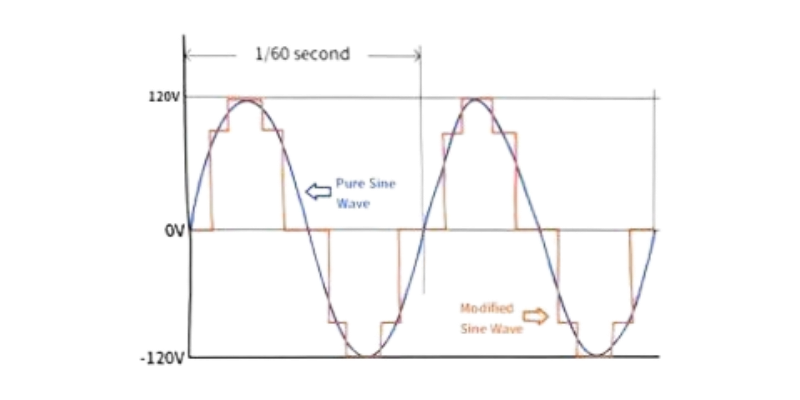
Modified sine wave inverters have a drawback when it comes to efficiency. There's a noticeable time interval between the positive and negative peaks of their output waveform. Since the modified sine wave is essentially made up of “jagged” parts, it lacks continuity. This results in lower efficiency compared to true sine wave inverters, which deliver a smooth, consistent flow of power.
Interference
Modified sine wave inverters can meet the needs of many common electrical devices. But here's the catch - they often come with around 20% harmonic distortion. This distortion can spell trouble when powering sensitive equipment like precision electronics or can cause annoying high - frequency interference with communication devices. True sine wave inverters, on the other hand, produce clean power, ensuring that all your devices, from your high - end gaming console to your delicate laboratory equipment, run smoothly without any interference or noise.
Which One is for You?
Ideal for modified sine wave inverters
If you only need to power simple devices without motors, like a few LED lights or a small fan, modified sine wave inverters can get the job done. They're also a decent choice if you're looking for a basic, affordable power conversion solution for occasional use. But don't expect them to handle complex appliances or sensitive electronics well.
Ideal for true sine wave inverters
True sine wave inverters are the go - to for those who need reliable power for a variety of devices. Whether you're powering your home during a blackout, running appliances in your RV, or keeping your office equipment running during a power outage, true sine wave inverters have you covered. They can handle inductive loads like refrigerators, air conditioners, and motors with ease, and they won't damage your sensitive electronics. In fact, they can even extend the lifespan of your devices by providing clean, stable power.
Our Recommendation
we recommend the pure sine wave inverters from SUMT, we highly recommend our range of true sine wave inverters. Not only do they offer top - notch performance, but they also come with comprehensive protection features. From over - voltage and under - voltage protection to overload, overheating, short - circuit, and reverse connection protection, our inverters ensure the safety and stability of your power system.
So, if you're ready to experience reliable, clean power for all your devices, browse our selection of true sine wave inverters today! Don't let power outages or unreliable electricity sources slow you down. Make the smart choice with SUMT's true sine wave inverters.
How many pv panels can be connectedto the solar inverter?
Can one inverter accommodate both 12VDC and 24VDC
Related Article