
How many pv panels can be connectedto the solar inverter?
2025-06-19
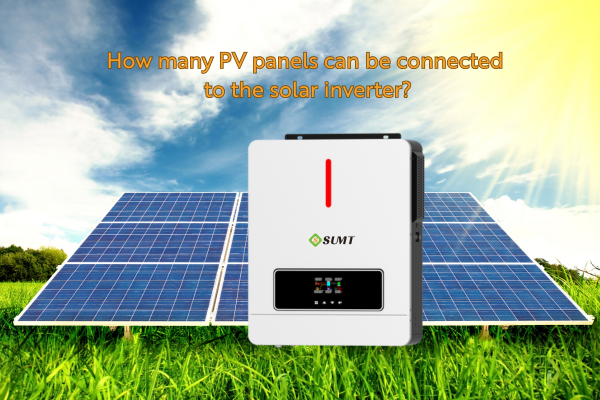
In the era of renewable energy, solar power generation systems have emerged as a cornerstone of sustainable energy solutions. At the heart of these systems lies the solar inverter, a crucial device responsible for converting direct current (DC) generated by photovoltaic (PV) panels and stored in batteries into alternating current (AC) for use by various electrical loads. A common question among installers and enthusiasts is: "How many photovoltaic panels can a solar inverter connect?" The answer isn't straightforward; it involves a meticulous consideration of multiple technical parameters from both the inverter and the PV panels
.
The Significance of Proper PV Panel Configuration
The number of PV panels connected to a solar inverter directly impacts the system's power - generation capacity, operational efficiency, and longevity. Over - configuring the number of panels can overload the inverter, leading to performance degradation, overheating, and potential permanent damage. Conversely, under - configuring results in underutilization of the inverter's capacity, causing a waste of resources and reduced return on investment. Thus, achieving the optimal balance is essential for maximizing the efficiency and reliability of solar power systems.
Key Factors Determining the Number of PV Panels
1. Maximum PV Input Power of the Inverter
Each solar inverter is rated with a maximum PV input power, which represents the upper limit of DC power it can safely handle. For example, consider a solar inverter with a rated power of 5000W and a maximum PV input power of 5600W. If each PV panel has a power rating of 350W, the theoretical maximum number of panels can be calculated as follows:Number of Panels=5600W/350W=16,However, this calculation is merely a starting point. Real - world configurations must account for additional factors such as voltage and current limits.
2. PV Input Voltage Range of the Inverter
The PV input voltage range is another critical parameter. Different inverters support varying voltage ranges, and exceeding the maximum allowable voltage can severely damage the inverter. Example SUMT inverter ECO -6.2KW, rated 6200W, maximum PV input power : 6500W, Voltage range :60V - 450V, its compatibility with PV panels needs careful evaluation.
Suppose each PV panel has a voltage rating of 36V. If we initially calculate the number of panels based on power (6500W ÷ 350W = 18), and then connect these 18 panels in series, the total series voltage would be 36V×18=648V,This value exceeds the inverter's maximum PV input voltage of 450V, posing a significant risk. The correct approach is to calculate based on voltage:
Number of Panels (Series)=450V/36V≈12.5
Rounding down to 12 panels, the total series voltage becomes 12×36V=432V, which falls within the inverter's specified voltage range.
3. Maximum PV Input Current of the Inverter
When PV panels are connected in parallel, the total current increases. The maximum PV input current of the inverter sets a limit on the number of parallel - connected panels. For example, if each PV panel has a current rating of 8A and the inverter's maximum PV input current is 22A, the maximum number of panels that can be connected in parallel is calculated as:
Number of Panels (Parallel)=22A/8A=2.75
Rounding down, only 2 panels can be connected in parallel to avoid exceeding the current limit.
Series, Parallel, and Hybrid Connections
In practical applications, PV panels can be connected in series, parallel, or a hybrid of both.
- Series Connection: In a series connection, the total voltage of the PV array is the sum of the voltages of individual panels, while the current remains the same. This configuration is ideal for increasing the voltage to match the inverter's requirements.
- Parallel Connection: In parallel connections, the total current of the array is the sum of the currents of individual panels, and the voltage remains constant. It is often used to increase the overall power output when the voltage requirements are met.
- Hybrid Connection: A hybrid connection combines both series and parallel arrangements. For the SUMT ECO 6.2KW inverter with 350W, 36V, 8A PV panels, a hybrid configuration might involve connecting 2 panels in parallel (to stay within the current limit) and then connecting 6 such pairs in series (to stay within the voltage limit). This setup ensures that both voltage and current requirements are satisfied while maximizing power output.
Practical Considerations for Configuration
1. Safety Margin
To ensure system stability and longevity, it is advisable to maintain a safety margin. Experts recommend reducing the theoretical maximum number of panels by 10% - 20%. For example, if the calculated maximum number of panels is 12, installing 10 panels can prevent the inverter from operating at full capacity continuously, reducing stress on the equipment and accommodating fluctuations in sunlight intensity or equipment aging.
2. Professional Consultation
Given the complexity of inverter and PV panel specifications, consulting professionals or manufacturers is highly recommended. Manufacturers can provide detailed product manuals and customized configuration solutions based on specific requirements, taking into account factors such as PV panel specifications, installation area, and budget constraints.
In conclusion, determining the number of PV panels that a solar inverter can connect requires a comprehensive analysis of multiple parameters, including power, voltage, and current, as well as the connection configuration. By carefully evaluating these factors and following best practices, users can optimize their solar power systems for maximum efficiency, reliability, and return on investment.
What are the types of photovoltaic power systems
What's the difference? modified sine waves VS true sine waves
Related Article
When Energy Storage Moves Beyond Backup Power: How Should We Rethink Hybrid Inverters in 2026?
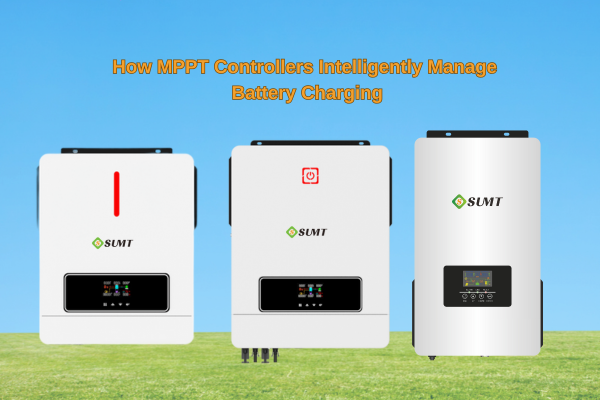
MPPT controller intelligently charges lithium and lead-acid batteries to protect lifespan and optimize output.
How MPPT Controllers Intelligently Manage Battery Charging
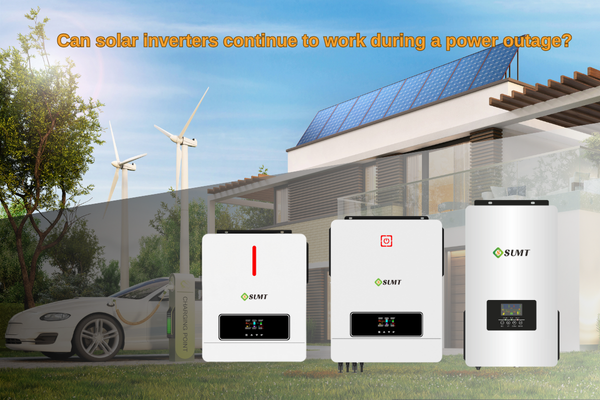
With the popularization of new energy, many households and businesses have installed solar power systems. A common question arises: Can solar inverters continue working during power outages? The answer depends on the inverter type, system configuration, and functional design.
Can solar inverters continue to work during a power outage?
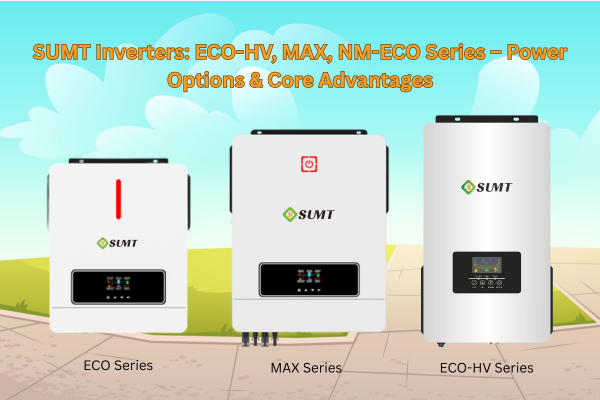
SUMT's ECO-HV, MAX, and NM-ECO inverters target diverse needs. ECO-HV excels in parallel expansion for large projects; MAX offers dual PV inputs for commercial stability; NM-ECO provides dual-load flexibility for homes. This guide details their specs, advantages, and uses.
SUMT Inverters: ECO-HV, MAX, NM-ECO Series – Power Options & Core Advantages