Can Photovoltaic-Generated Electricity Be Used Directly
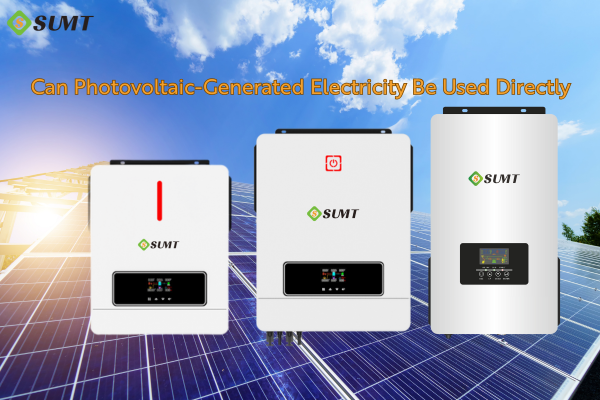
Photovoltaic (PV) - generated electricity can indeed be used directly, yet whether it can be directly connected to electrical devices hinges on the type of the power generation system and the requirements of the electrical devices. Here is a detailed breakdown:
Types of Photovoltaic Power Generation Systems and Power Consumption Modes
Photovoltaic power generation systems are mainly categorized into off - grid (independent) systems and on - grid (connected) systems, and different types of systems handle electrical energy in distinct ways:
1. Off - Grid Photovoltaic Power Generation Systems
System Composition: Composed of solar panels, batteries, optional inverters, controllers, etc., operating independently without grid connection.
Direct Power Consumption Conditions:
- DC Electrical Devices: For DC devices (such as DC light bulbs, DC fans, solar streetlights, etc.), the direct current (DC) generated by solar panels can be used directly without the need for conversion by an inverter.
- AC Electrical Devices: To power AC devices (like household appliances), an inverter is required to convert DC power into alternating current (AC).
Characteristics: Relying on battery energy storage, off - grid systems are suitable for remote areas without grid access. The generated electricity is preferentially supplied to devices, and the surplus is stored in the batteries.
2. On - Grid Photovoltaic Power Generation Systems
System Composition: Comprising solar panels, inverters, grid - connected distribution boxes, etc., directly connected to the power grid.
Power Consumption Modes:
- Self - Consumption: The DC power generated by solar panels is converted into AC by an inverter and can be directly used to power internal AC electrical devices in households or enterprises (such as air conditioners, refrigerators, lights, etc.).
- Excess Power Sold to the Grid: When the power generation exceeds self - consumption, the surplus electricity can be sold to the power supply company through the grid (subject to relevant agreements).
- Grid - Supplemented Power: In case of insufficient power generation, electricity can be drawn from the grid, enabling a flexible mode of "self - consumption, selling excess power to the grid, and supplementing from the grid when insufficient".
Characteristics: Without the need for batteries, on - grid systems prioritize local power consumption, offering higher economic efficiency and representing the current mainstream application form.
Key Conditions for Direct Power Consumption
For both off - grid and on - grid systems, the direct use of PV - generated electricity must meet the following conditions:
1. Voltage and Frequency Matching
The DC voltage output by solar panels is typically 12V, 24V, 36V, etc. (depending on the panel specifications), while most household electrical devices operate on 220V AC (with a frequency of 50Hz).
DC devices can be directly connected to the panels (with voltage stabilization through a controller), whereas AC devices must be converted into standard - compliant AC (e.g., 220V/50Hz) by an inverter.
2. Power Matching
The output power of solar panels needs to match the power requirements of electrical devices. For instance, a 100W solar panel can directly power DC devices below 100W. However, to drive a 1000W air conditioner, multiple panels need to be connected in parallel or used in conjunction with an inverter (for on - grid systems, overall capacity must be considered).
3. Safety Protection Devices
To prevent risks such as overloading and short - circuits, devices like circuit breakers, fuses, and surge protectors should be installed in the system to ensure electrical safety.
Common Application Scenarios
1. Off - Grid System Direct Power Consumption Cases
- DC Lighting: In rural or outdoor settings, solar panels directly power DC LED lights, eliminating the need for an inverter.
- Vehicle and Vessel Power Consumption: Solar panels on RVs and ships directly supply power to DC devices such as onboard refrigerators and water pumps.
- Small - scale DC Systems: Examples include solar - powered surveillance cameras and weather stations, which directly utilize the DC output from solar panels.
2. On - Grid System Direct Power Consumption Cases
- Household Power Consumption: The AC power generated by PV systems is connected to the household distribution box through an inverter, directly powering devices like TVs, washing machines, and water heaters.
- Commercial and Industrial Power Consumption: PV systems in factories and shopping malls preferentially supply power to internal production lines, lighting, etc., reducing electricity costs.
Precautions
1. Energy Storage Limitations of Off - Grid Systems
For continuous power supply (e.g., during nighttime without sunlight), off - grid systems must be equipped with batteries for energy storage; otherwise, PV - generated electricity cannot be used directly.
2. Grid Dependence of On - Grid Systems
Although on - grid systems allow for direct power consumption, it is essential to ensure that the inverter is synchronized with the grid (in terms of frequency and phase); otherwise, it may affect device operation or pose safety risks.
3. Device Compatibility
Non - standard voltage DC devices (such as special - specification motors) require matching PV components and controllers to avoid device damage.
Conclusion
- DC Devices: In off - grid systems, PV - generated electricity can directly power DC devices without conversion.
- AC Devices: In both off - grid and on - grid systems, PV - generated electricity needs to be converted into AC by an inverter before it can be used to power household or industrial AC devices.
- Priority Principle: In on - grid systems, PV - generated electricity is preferentially used by local devices, and the surplus is sold to the grid, combining economic efficiency and practicality.
In conclusion, whether PV - generated electricity can be used directly depends on the type of electrical devices (DC/AC) and system design. With proper configuration, solar energy can be utilized safely and efficiently.
Differences Between KW and KVA
what are inverter efficiency, continuous outputpower and peak output power
Related Article