
How to improve the efficiency and power generation of inverter?
2025-07-21
Inverters act as the "core hub" of energy conversion in new energy power systems, where efficiency directly determines power output and user returns. Even a small efficiency improvement translates to significant long-term gains. For a 500KW inverter, a 1% increase in efficiency—with 4 hours of daily effective generation—delivers approximately 20 extra kWh per day, nearly 7,300 kWh per year, and 73,000 kWh over a decade. That’s equivalent to the full annual output of a 5KW small-scale power station, making efficiency optimization critical for maximizing user profits.
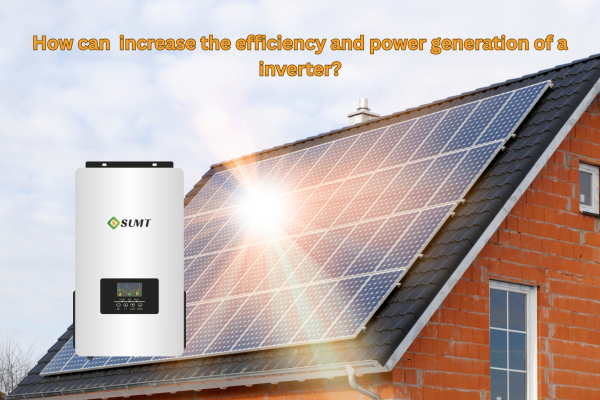
Core Sources of Inverter Efficiency Loss
Improving efficiency relies on minimizing energy loss, which primarily originates from two key components: power switching devices (such as IGBTs and MOSFETs) and magnetic components (including transformers and inductors). The extent of these losses depends on component parameters, materials, and manufacturing processes.
-
Losses in Power Switching Devices: These are divided into conduction loss and switching loss. Conduction loss is influenced by the device’s on-resistance and the current passing through it—the higher the resistance or current, the more energy is converted into heat. Switching loss is related to the switching frequency and the DC-side voltage the device withstands; high-frequency switching or high-voltage environments significantly increase energy loss during the switching process.
-
Losses in Magnetic Components: These include copper loss and iron loss. Copper loss is caused by the resistance of the coil: as current flows through inductors or transformer coils, the wire resistance converts part of the electrical energy into heat. This loss can be estimated by measuring the device’s short-circuit impedance. Iron loss consists of hysteresis loss and eddy current loss. Hysteresis loss is the energy wasted when the iron core is repeatedly magnetized and demagnetized in an alternating magnetic field, while eddy current loss is the heat generated by induced eddy currents within the core. Iron loss can be quantified by measuring the device’s no-load current.
Three Technical Breakthroughs to Overcome Efficiency Bottlenecks
1. Optimized Digital Control Algorithms: Precisely Reducing Switching Losses
Advanced digital control strategies like Space Vector Pulse Width Modulation (SVPWM) enhance DC voltage utilization. For a given output voltage requirement, this reduces the DC bus voltage, lowering the voltage stress on power devices and directly cutting switching loss. Additionally, optimizing the combination of vector sequences reduces the number of switching operations, further minimizing switching loss and continuously improving inverter efficiency.
2. Silicon Carbide (SiC) Devices: Material Innovation for Lower Resistance
Silicon carbide outperforms traditional silicon materials: SiC power devices have a specific on-resistance per unit area that is only 1% of silicon devices, and their on-state resistance can be as low as 10% of silicon counterparts. This not only reduces conduction loss but also drastically lowers diode reverse recovery current, decreasing energy loss during switching. In practical applications, SiC anti-parallel diodes improve total inverter efficiency by approximately 1% compared to traditional silicon diodes; when paired with fast IGBTs and optimized drive circuits, overall efficiency can increase by more than 2%.
3. Multilevel Topology + Soft Switching: Doubly Reducing Voltage Stress
Soft switching technology uses resonant principles to enable power devices to switch under zero-current or zero-voltage conditions, fundamentally eliminating switching loss while reducing electromagnetic interference (EMI) caused by inductive turn-off and capacitive turn-on. Multilevel topology technology improves efficiency by increasing the number of output levels. For example, a three-level inverter adds a zero-voltage output compared to a traditional two-level structure, halving the voltage stress on power devices. This advantage allows the use of smaller filter inductors (reducing inductor loss) at the same switching frequency or lower switching frequencies (reducing switching loss) under the same harmonic control requirements, thereby doubling efficiency gains.
By combining these technologies, inverters can maintain high efficiency under rated operating conditions and operate stably in low-load or complex grid environments. Ultimately, this maximizes power generation and creates greater economic value for users—turning every bit of potential energy into tangible returns.
How to Use an Inverter Safely?
String Inverters vs. Microinverters: Which Is Better for Your Solar System?
Related Article
When Energy Storage Moves Beyond Backup Power: How Should We Rethink Hybrid Inverters in 2026?
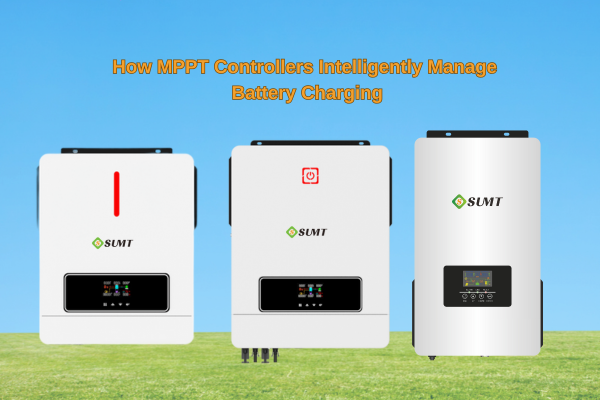
MPPT controller intelligently charges lithium and lead-acid batteries to protect lifespan and optimize output.
How MPPT Controllers Intelligently Manage Battery Charging
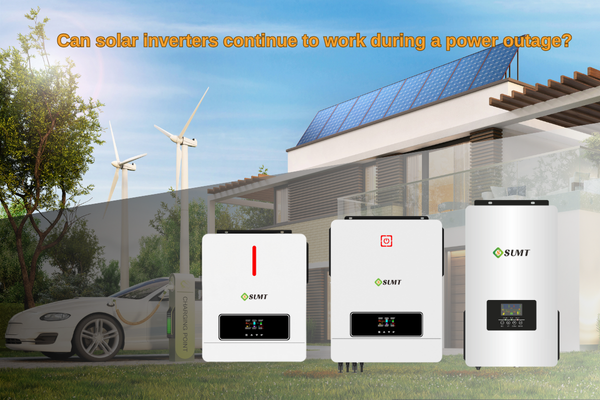
With the popularization of new energy, many households and businesses have installed solar power systems. A common question arises: Can solar inverters continue working during power outages? The answer depends on the inverter type, system configuration, and functional design.
Can solar inverters continue to work during a power outage?
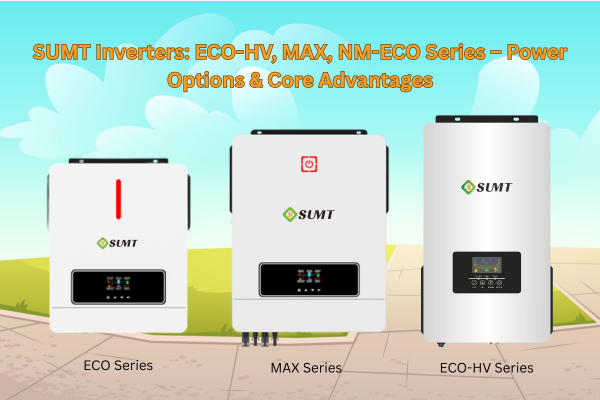
SUMT's ECO-HV, MAX, and NM-ECO inverters target diverse needs. ECO-HV excels in parallel expansion for large projects; MAX offers dual PV inputs for commercial stability; NM-ECO provides dual-load flexibility for homes. This guide details their specs, advantages, and uses.
SUMT Inverters: ECO-HV, MAX, NM-ECO Series – Power Options & Core Advantages