
How to Use an Inverter Safely?
2025-07-23
Inverters are critical for converting DC to AC power, but improper operation can lead to equipment failure or safety hazards. This guide outlines 6 key precautions covering safe wiring, environmental management, load control, and maintenance. It also recommends SUMT Inverters—a reliable choice with multi-layer safety protections, strict quality control, and global certifications, ensuring safe and efficient performance across diverse applications.
Inverters play a vital role in home backup power, outdoor camping, and photovoltaic systems. However, lack of proper usage knowledge often results in equipment damage or safety risks. By following scientific usage guidelines and selecting a reputable inverter brand, you can ensure stable and secure power conversion. Below are essential tips for safe inverter use and recommendations for a trustworthy manufacturer.
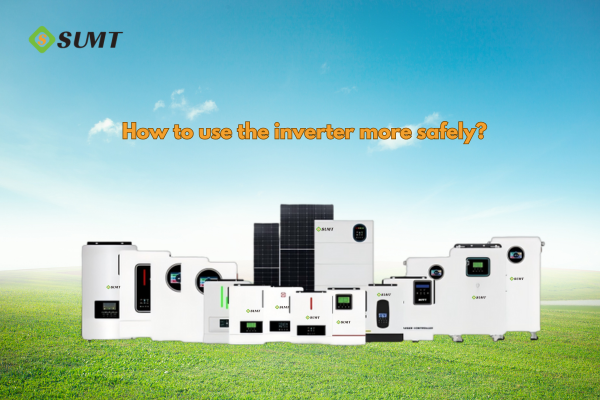
1. Safe Wiring: Never Reverse Polarity
Wiring is the foundational step that demands precision. When connecting DC power sources (batteries, solar panels, etc.), strictly adhere to the "positive-to-positive, negative-to-negative" principle. Polarity reversal can cause immediate burnout of internal components. Always disconnect power before wiring, use insulated tools/gloves during operation, and verify connections by gently tugging cables to ensure secure fastening—loose connections may cause arcing or poor conductivity.
2. Environmental Requirements: Avoid Moisture, Heat, and Dust
Inverters are sensitive to environmental conditions. High humidity increases short-circuit risks, while temperatures exceeding 40°C degrade heat dissipation efficiency and reduce conversion performance. Install inverters in well-ventilated, dry, and cool locations, away from kitchens, bathrooms (moisture sources), and heat generators like heaters or stoves. For outdoor use, equip with dust covers to prevent clogging of ventilation grilles; for fixed installations, implement anti-vibration measures to avoid loose wiring from vibrations.
3. Load Management: Stay Within Rated Capacity
Overloading is the primary cause of inverter failures. Calculate the total power of connected devices to ensure it never exceeds 80% of the inverter’s rated power (e.g., a 2000W inverter should handle ≤1600W actual load). Note that high-power appliances (air conditioners, microwaves) draw surge currents during startup—start them individually and avoid simultaneous operation of multiple heavy loads. For inductive loads (refrigerators, water pumps), opt for inverters labeled "inductive load compatible" to withstand startup surges.
4. Surge Protection: Mitigate Instantaneous Current Spikes
Motor-driven devices (washing machines, fans) generate inrush currents 3-5 times their rated current during startup, which may trigger overload protection. To prevent this, power on inductive loads first before connecting other devices, or select an inverter with sufficient power margin to accommodate transient spikes.
5. Routine Maintenance: Ensure Long-Term Reliability
Regular maintenance extends inverter lifespan significantly:
- Clean dust from surfaces and heat sinks with a soft brush every 1-2 months to maintain thermal efficiency.
- Inspect terminals monthly for looseness or oxidation, and check cables for insulation damage—repair or replace promptly if issues are found.
- Avoid frequent on/off cycles; allow a 30-second interval between restarts to prevent voltage shocks.
6. Troubleshooting: Act Swiftly on Anomalies
If abnormalities occur:
- For indicator flashes or audible alarms: Power off immediately, check for overloads or loose connections.
- For unusual odors or excessive heat: Cease operation at once and contact professional technicians for inspection—never disassemble the unit yourself.
- Retain the user manual for quick reference to error codes and basic troubleshooting.
Choose SUMT: A Brand You Can Trust
Selecting a reputable manufacturer minimizes inherent risks. With over 10 years of expertise in solar inverter production, SUMT stands out for its commitment to safety and quality:
- Multi-layer Protection: Built-in safeguards against overcurrent, overvoltage, short circuits, and reverse polarity—automatic shutdown activates during faults to prevent hazards.
- Quality Assurance: 100% full inspection and ISO9001 certification ensure rigorous control over thermal design and circuit stability, enabling operation in harsh environments (humidity, high temperatures).
- Global Compliance: Certified by CE, TUV, and IEC, SUMT inverters meet international standards for performance and safety.
Whether for residential PV systems, outdoor adventures, or industrial backup power, combining these precautions with SUMT’s reliable inverters guarantees safe, efficient, and worry-free operation. Trust in professional engineering to maximize your inverter’s performance and longevity.
SUMT Inverters: ECO-HV, MAX, NM-ECO Series – Power Options & Core Advantages
How to improve the efficiency and power generation of inverter?
Related Article
When Energy Storage Moves Beyond Backup Power: How Should We Rethink Hybrid Inverters in 2026?
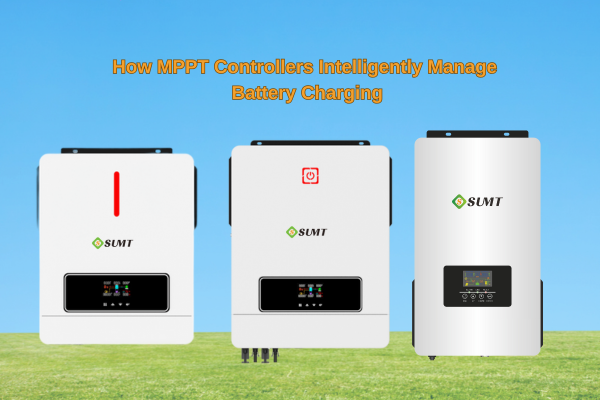
MPPT controller intelligently charges lithium and lead-acid batteries to protect lifespan and optimize output.
How MPPT Controllers Intelligently Manage Battery Charging
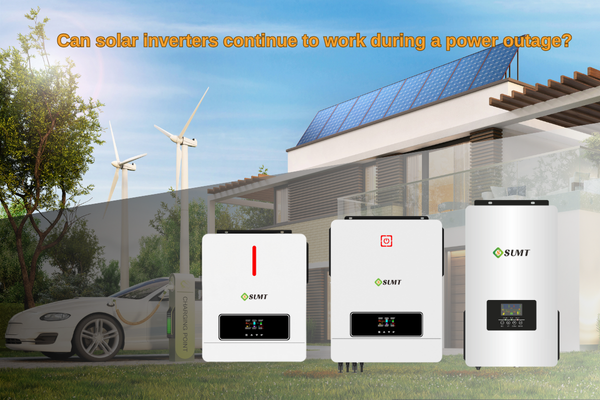
With the popularization of new energy, many households and businesses have installed solar power systems. A common question arises: Can solar inverters continue working during power outages? The answer depends on the inverter type, system configuration, and functional design.
Can solar inverters continue to work during a power outage?
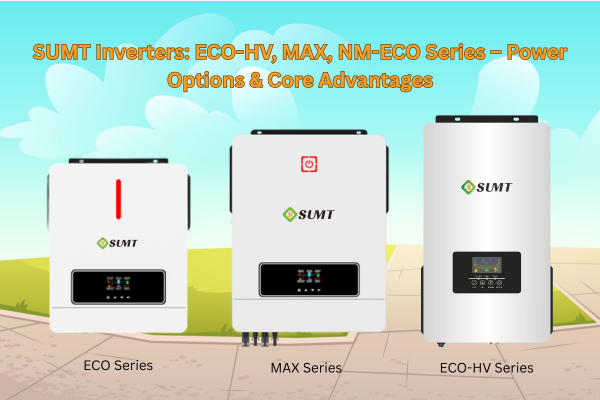
SUMT's ECO-HV, MAX, and NM-ECO inverters target diverse needs. ECO-HV excels in parallel expansion for large projects; MAX offers dual PV inputs for commercial stability; NM-ECO provides dual-load flexibility for homes. This guide details their specs, advantages, and uses.
SUMT Inverters: ECO-HV, MAX, NM-ECO Series – Power Options & Core Advantages