Why Are More Families Paying Attention to Energy Storage Systems?
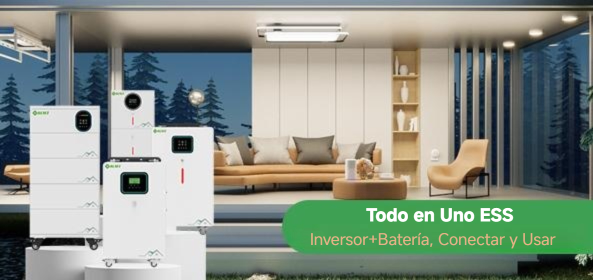
A practical look at the changing trend of home energy management from an engineer's perspective.
Over the past few years, I have worked on many home energy storage projects, from city apartments to countryside villas, and from Southeast Asia to the Middle East and Africa. Users in different countries ask different questions, but in the end they usually come back to the same point: how can a home have an energy system that is more stable, more efficient, and more economical?
Many people first learn about energy storage because of a power outage. Some are worried about rising electricity bills and want to reduce long-term costs. Others already have solar panels but find that much of the daytime electricity is not being fully used.
From an engineering point of view, these different concerns all point in the same direction: the way homes manage energy is changing.
In the past, most homes relied mainly on the public grid and were only energy users. Today, with solar power, lithium battery storage, and smart control technology, more homes are gaining the ability to generate, store, and manage their own energy. This is the key reason why hybrid home energy storage systems are developing so quickly.
Energy Storage Is More Than Backup Power
When many users first ask about storage products, their first question is: can I still use electricity during a power outage? The answer is yes. But if we only see energy storage as a backup power source, we miss much of its real value.
In real projects, we care more about how energy flows than where the electricity comes from. A typical example is easy to understand.
For most homes, solar generation is strongest from around 10 a.m. to 3 p.m. During that time, many family members are not at home, and equipment such as air conditioners and televisions may not be running continuously. This means a large amount of solar power is not consumed immediately by the home.
Without a storage system, surplus electricity is usually sent back to the grid according to local policy, or it may not be fully used because of export limits. With storage, energy gains time value.
Electricity not used during the day can be stored and used at night. Energy stored on a cloudy day can continue powering the home the next morning. During an outage, the system can keep key loads such as lighting, internet equipment, and refrigerators running.
From an engineering design perspective, this is the real meaning of energy storage: it lets energy be scheduled according to the home's actual needs, instead of being used only at the moment it is generated.
Why Hybrid Storage Inverters Are Becoming More Important
If the whole home storage system is a team, the PV modules generate electricity, the battery stores electricity, and the hybrid storage inverter acts as the dispatch center.
It does more than convert power. More importantly, it keeps making decisions:
• How much solar power is being generated now?
• How much power is the home using?
• How much energy is left in the battery?
• Is the grid operating normally?
• Which energy source should be used first?
These decisions are made almost every moment. That is why we do not judge a hybrid inverter only by conversion efficiency. We also look at its control strategy, software algorithms, protection logic, and long-term operating stability.
A good hybrid inverter can automatically adjust energy flow under different operating conditions, without asking the user to switch modes again and again. For an ordinary household, this means the system can think for itself instead of relying on manual operation.
There Is No Single Standard Answer for Home Storage
Many customers ask: is 6 kW enough? Is a 10 kWh battery better? In reality, there is no universal standard for a home energy storage solution.
During project design, we usually start with a few basic questions:
• What is the home's average daily electricity use?
• Which devices are critical loads?
• Does the area often experience power outages?
• How many solar panels can the roof support?
• Will the owner add EV charging or expand the system later?
Only after understanding these basics can we design a more suitable system. For example, if a typical home mainly wants to reduce long-term electricity bills, the focus should be on increasing solar self-consumption. In areas with an unstable grid, storage capacity and backup time become more important.
Even the same inverter may need a different design approach in different applications. Good engineering design is not about using the highest configuration. It is about finding the right balance between performance, reliability, and investment.
Products Are Only the Beginning
After years of project work, I have become more convinced that system performance is never decided by the equipment alone.
Reasonable PV configuration, matching battery capacity, standard installation, reliable heat dissipation, correct battery communication settings, and complete protection strategy all affect how the system performs over the next few years.
That is why we always recommend looking beyond product parameters. A complete system plan, compatibility between products, and continuous technical support are just as important.
How SUMT Understands Home Energy Storage
At SUMT, we believe a hybrid storage inverter is not just a product. It is the core control platform of the entire home energy system.
During product development, we focus more on real long-term applications than on laboratory performance figures alone.
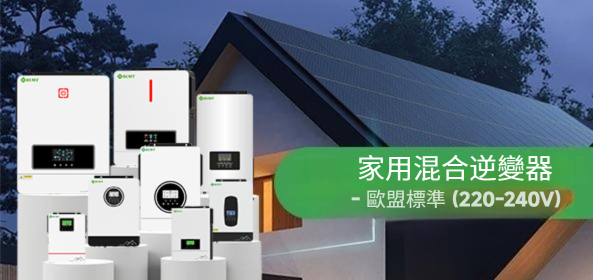
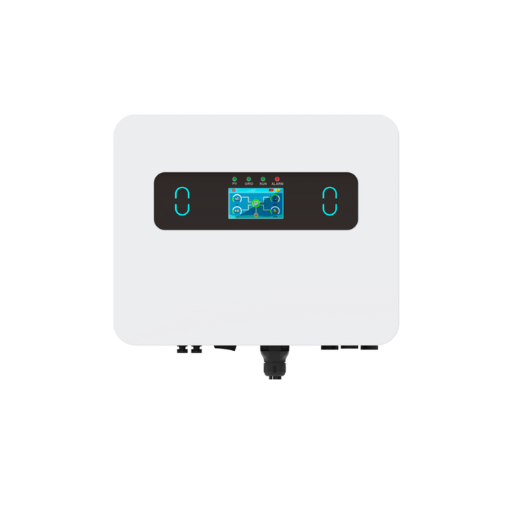
SUMT's HS1 Series and HC1 Series hybrid storage inverters are designed for different indoor and outdoor installation environments. They support coordinated operation among solar power, batteries, the utility grid, and backup generators. Combined with intelligent energy management, dual MPPT, multiple battery communication protocols, and remote monitoring, they provide flexible system configurations for homes, villas, small commercial projects, and regions with weaker grid stability.
Specific product selection should be based on real project requirements and the technical documents and installation instructions of the corresponding model.
Conclusion
The development of home energy storage is not only a technical upgrade in the new energy industry. It also represents a change in how families think about energy management.
In the future, more families will no longer be just energy consumers. They will gradually become energy managers and active participants.
For engineers, a good system must run reliably today and adapt to changing energy needs in the future. For users, a truly valuable storage system is not only about saving a few kilowatt-hours. It is about providing a reliable, safe, and easy-to-manage energy experience over many years.
This is why we continue investing in research, development, and system optimization: every home storage system should truly serve the user, not remain only as numbers in product specifications or marketing materials.
After the Solar Boom, What Comes Next?
Home Energy Storage Is Entering the Smart Era
Related Article