After the Solar Boom, What Comes Next?

How the value of hybrid energy storage is changing—from an engineer’s perspective
After years in the renewable energy industry, one change has become increasingly clear. Customers once began with a simple question: “How many kilowatts is this inverter?” Then they started asking how much PV it could accept. Today, experienced customers go much further:
- At full PV output, can the system power the loads and charge the battery at the same time?
- Can the two MPPTs operate independently?
- What does the system do when battery SOC is low?
- Which loads keep running after a grid outage?
- Can the current system be expanded if more batteries or loads are added later?
These are not merely more technical questions. They reveal a broader shift: users are moving beyond individual product specifications and asking how the entire energy system will operate.
The faster solar grows, the more important energy management becomes
Global solar additions continued to grow at a very high rate in 2025. That is good news for the industry, but engineers working on inverters and storage systems do not look only at how many gigawatts of PV have been installed. We care about another question: when is that solar electricity produced, and when is it actually needed?
Solar output often peaks between about 11 a.m. and 2 p.m., when household demand may be modest. After 6 p.m., family members return home and air conditioners, kitchen appliances, water heaters, televisions, lighting, and other devices begin operating. Demand rises just as solar generation falls.
Solar answers “where does the energy come from?” Storage answers “when will the energy be used?”
This is why storage becomes more valuable—not less—as solar penetration increases.
A hybrid inverter should no longer be viewed as only a conversion device
A traditional inverter mainly converts electricity between DC and AC. A modern hybrid inverter carries far more responsibility. In a typical home or small commercial storage system, it must coordinate:
- PV input;
- the storage battery;
- the public grid;
- user loads;
- and, in some projects, a backup generator.
The hard part is not connecting these sources. It is deciding which one takes priority, which one remains in reserve, when the battery charges or discharges, what should disconnect during a fault, and how the system stays stable.
Consider a simple example. PV is producing 8 kW while the home is using 3 kW. If battery SOC is low, the remaining 5 kW can charge the battery. If the battery is already near its configured SOC limit, the system must decide whether to curtail output or export the surplus to the grid, subject to system settings and local rules.
If a high-power air conditioner starts and demand jumps from 3 to 6 kW, the system must immediately rebalance power among PV, the battery, and the grid.
That is why we describe the hybrid inverter as the control center of the home energy system. Its value lies not only in how much power the hardware can handle, but also in its control logic.
Why projects increasingly require two simultaneous PV inputs
As module prices fall and demand for energy independence rises, many households want to install more panels within limited roof space. PV input design therefore needs greater flexibility.
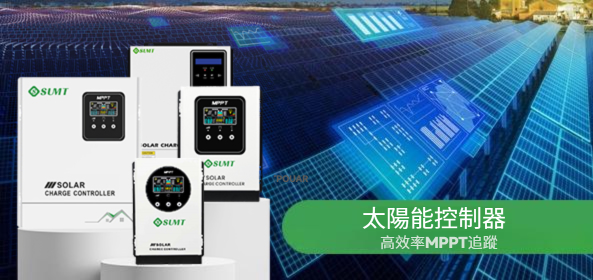
Two independent MPPTs are especially valuable when panel groups face different directions. One array may perform better in the morning and another in the afternoon. Tracking them separately allows the system to respond more effectively to a generation curve that changes throughout the day.
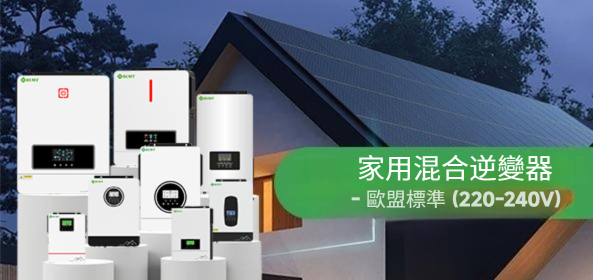
This is one of the real-world scenarios considered in SUMT hybrid products such as the HS1 and HC1 series. The control logic should not simply “use PV to charge the battery.” It should supply real-time loads first, then use surplus power for charging according to battery status.
Allowable PV input power, MPPT voltage range, and model compatibility must be matched to the specific product datasheet during system design.
With storage, bigger is not always better
During system design, users often say they want a large battery or assume more capacity is always better. Neither statement is meaningful without the load profile.
If a home uses only about 12 kWh per day but installs a very large battery without enough surplus rooftop generation, much of that capacity may remain unused. Conversely, a home with heavy air-conditioning loads and a small battery may reach its configured discharge limit very quickly.
A sound design starts with the loads, then considers PV generation, defines the operating logic, and only then selects battery capacity and chemistry.
How much electricity is needed each day? At what times? Which loads must be protected? How much solar energy should not be wasted? Those answers should determine battery size.
The goal is not to choose an inverter first and force every other device to fit it. The equipment should be selected around the actual application.
IP65, user interface, and cooling: when do they create real value?
Product sheets list many features. An engineer asks a more useful question: what real problem does each feature solve?
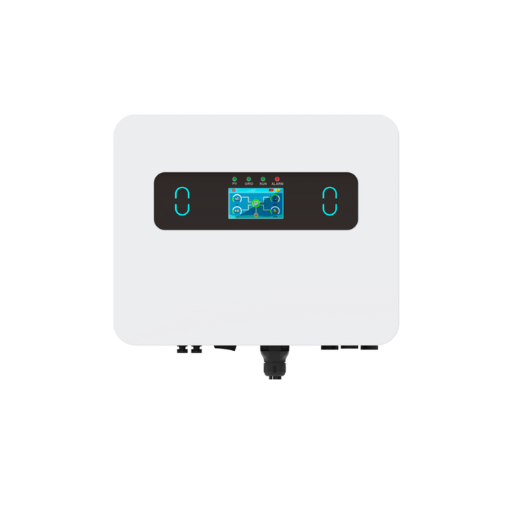
The SUMT HC1 series uses an IP65 enclosure design. This is more than a label; it is intended to provide suitable protection in outdoor, semi-outdoor, dusty, or humid installation environments. For the more residentially focused HS1 series, a clear screen, intuitive daily interaction, and visible energy-flow information become especially important.
Cooling is not a matter of “the faster the fan, the better.” A proper strategy responds to internal temperature and operating power while balancing thermal control, noise, service life, and performance.
That is the difference between a feature that appears on a specification sheet and one that adds value to a project.
Competition in 2026 will be system versus system, not hardware versus hardware
Energy storage continues to expand rapidly, from basic backup power to energy shifting, multi-source integration, and grid resilience. Global battery storage reached 108 GW in 2025, up about 40% year over year, making it one of the central forces in the energy transition.
For inverter manufacturers, the next stage will not be decided only by who offers the highest power rating. It will be decided by who can coordinate PV, batteries, the grid, and loads most effectively.
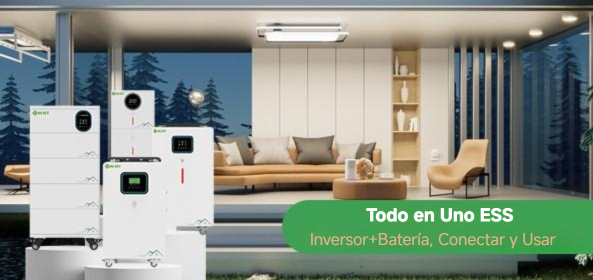
This is the direction behind SUMT’s current portfolio: HS1 for residential hybrid systems, HC1 for larger hybrid applications, and platforms such as HS3 for higher-power storage. They are not simply the same machine in different sizes; they address different installation conditions, load profiles, and energy strategies.
No single inverter is ideal for every application. First understand how the user consumes electricity; then choose the equipment.
A good storage system proves its value years after installation
Most systems can be made to run on installation day. The real difference appears one, three, or five years later:
- Does the inverter still communicate reliably?
- Does the equipment operate normally in extreme temperatures?
- Does the system remain stable as the battery ages?
- Can the original design support future expansion?
- Can faults be located quickly?
- Can remote monitoring reduce unnecessary service visits?
Before recommending an inverter, ask what problem the system needs to solve: reducing grid dependence, increasing solar self-consumption, improving tariff economics, protecting critical loads, or preparing for an EV, more air conditioning, and other future demand.
Once that answer is clear, product selection often becomes simpler. The value of storage is not having more equipment; it is delivering energy, at the right time, to where it is truly needed. That is also the problem SUMT aims to solve through product development and system optimization.
Note: This article discusses energy-storage applications from an engineering perspective. Grid rules, tariffs, installation conditions, and load profiles vary by market. Always refer to the datasheet and installation manual for the applicable model.
When Energy Can No Longer Be Taken for Granted: What the Energy Market in 2026 Tells Us About the Growing Importance of Solar and Storage
Why Are More Families Paying Attention to Energy Storage Systems?
Related Article