When Energy Can No Longer Be Taken for Granted: What the Energy Market in 2026 Tells Us About the Growing Importance of Solar and Storage
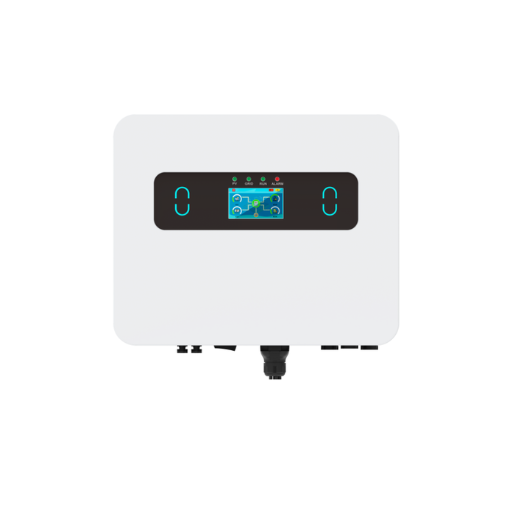
If someone had asked me a year ago, “Why do we need energy storage?”, many people’s first answer would probably have been: to keep the power on during an outage.
But in 2026, viewing storage only as backup power no longer explains the changes taking place across the industry.
Fluctuating natural gas supplies, changing electricity prices, extreme weather, pressure on the grid, and rising electricity demand all point to something we have often overlooked: a reliable power supply cannot be taken for granted everywhere, all the time.
For a household, a blackout can mean no air conditioning, a refrigerator without power, and no internet connection. For a shop, office, farm, or small factory, the consequences can go beyond inconvenience and become real business losses.
So when we discuss solar and storage today, we are talking about more than green energy. We are asking a much more practical question: how can we make our own energy systems more self-reliant and better able to withstand disruption?
The energy market in 2026 is another reminder that energy security matters
Global energy markets have experienced several sharp shocks in recent years. Events in 2026 are once again showing just how vulnerable energy supply chains remain.
Natural gas prices, international transport, geopolitical developments, and extreme weather can all affect energy markets and ultimately feed through to the electricity system.
Meanwhile, something else is happening: we are using more electricity.
Air conditioning, electric vehicles, heat pumps, data centers, industrial electrification, and a growing number of smart devices are all adding to demand.
That means tomorrow’s energy challenges cannot be solved simply by building more power plants. We also need to ask whether the electricity we generate can be used when it is actually needed.
This is why storage has begun to move from being an add-on to renewable energy projects to becoming an important part of the modern power system.
Solar answers “where does the energy come from?” Storage answers “when do we use it?”
This is something we often explain to customers when designing storage systems.
One of solar energy’s greatest strengths is that its source is widely available, with excellent conditions for deployment in many regions. But solar also has an inherent limitation: it does not generate electricity according to our schedules.
The sun will not rise again because a family gets home at 6 p.m. and starts cooking or turns on the air conditioning. Nor will daylight last a few extra hours because a factory needs to work late.
There is therefore a natural timing gap between solar generation and actual consumption. This is where storage comes into its own.
- During the day, solar power supplies the household loads.
- If solar generation exceeds demand, the surplus charges the battery.
- In the evening, the battery supplies the household loads.
- When the battery reaches its configured minimum discharge level, the grid supplies the household loads.
If the public grid develops a fault, a system that supports off-grid or backup operation can also continue powering critical loads according to its settings.
From an engineering perspective, this is what makes solar-plus-storage so valuable. It is not simply a matter of adding a battery. It creates a controllable energy buffer between generation and consumption.
Energy security does not mean disconnecting from the grid entirely
This distinction matters. Some marketing can give users the impression that installing solar and storage will let them do away with the public grid altogether. In real projects, that is not usually the advice we give our customers.
For most homes and small commercial sites, coordinating solar, storage, and the grid often makes more sense than pursuing complete off-grid operation.
Why? Because both the weather and the loads change. A household may use only 10 kWh today but need more tomorrow because of air conditioning, an electric vehicle, or other equipment. Several cloudy or rainy days can also reduce solar output considerably.
A well-designed energy system should therefore not rely on a single source. A more sensible approach is to:
- Make full use of solar energy when the sun is available.
- Store surplus energy when there is more than needed.
- Draw on the battery when required.
- Use the public grid to supplement supply where conditions allow.
Where the local grid is weak, a backup generator can also be included to suit the project’s actual needs.
This is not about “leaving the grid behind.” It is about reducing dependence on a single energy source. In terms of system reliability, those are two very different ideas.
Energy crises are changing what users understand by reliability
In the past, price was often the first thing customers compared when buying an inverter. Today, more and more customers ask us different questions:
- How long does it take to switch over after a power outage?
- What does the system do when the battery’s state of charge (SOC) is low?
- Can it supply loads and charge the battery at the same time?
- Can both PV inputs operate simultaneously?
- How does the inverter protect itself when the grid is unstable?
- Can a generator be connected?
- What happens if I want to add more batteries later?
These questions show that users are becoming better informed. They are realizing that the real comparison is not just what an inverter costs on the day of purchase, but how it will work over the next several years.
This is also why SUMT increasingly emphasizes system capabilities when developing product platforms such as HS1, HC1, and HS3.
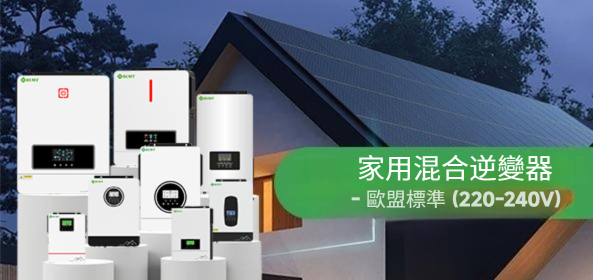
A hybrid inverter is, in effect, an energy dispatch center
In a modern solar-plus-storage system, an inverter does much more than convert DC to AC. It must manage solar PV, the battery, the grid, the loads, and—in some systems—a generator, all at the same time.
The relationships between these energy flows change throughout the day.
At noon, for example, solar generation may be plentiful. Household loads need 3 kW, while PV can provide 8 kW. The system must first meet the load, then decide what to do with the remaining energy based on battery SOC, charging power, and the user’s settings.
By early evening, PV may be producing only 1 kW while household demand has risen to 5 kW. The system has to rebalance power among PV, the battery, and the grid. If a grid outage suddenly occurs at that point, it must also determine which loads should keep running.
So the real test of a hybrid inverter is not simply “What is its maximum power?” It is “Can it make the right decisions as energy conditions keep changing?”
Why does SUMT place increasing importance on simultaneous PV, load, and battery operation?
The reason comes from real applications, not a desire to add more specifications to a datasheet.
Many earlier storage systems followed a relatively simple sequence: solar generation, battery charging, then battery discharge at night. Today, users want to make fuller use of their solar energy.
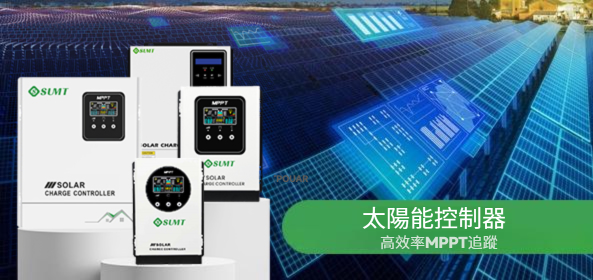
In designing hybrid storage products such as the current HS1 and HC1 series, SUMT therefore places greater emphasis on practical operating capabilities: dual PV/MPPT channels, coordinated solar supply to loads and battery charging, battery management, temperature monitoring, and intelligent cooling.
When solar power is plentiful, for example, a well-designed system should not just charge the battery automatically without considering the rest of the installation. It needs to assess:
- How much power do the loads need right now?
- How much charging power can the battery accept?
- What is the battery’s SOC?
- How much energy can PV still provide?
- How is each MPPT currently operating?
Together, these factors determine how energy should be distributed. Users may never see these control processes, yet it is precisely this behind-the-scenes work that shapes their day-to-day experience.
Different regions need different storage systems
One easily overlooked aspect of an energy crisis is that users around the world are not facing the same problems.
Some European users focus more on electricity prices, shifting energy use between peak and off-peak periods, and increasing solar self-consumption. In the Middle East, operation in high temperatures deserves greater attention. Parts of Southeast Asia combine heat and high humidity, placing different demands on equipment’s ability to cope with its environment. In Africa and some emerging markets, users may be more concerned about weak grids, frequent outages, and coordination with backup generators.
That is why SUMT has not tried to solve every problem with a single product.
- The HS1 series focuses more on indoor residential hybrid storage applications.
- The HC1 series features an IP65 protection design, offering another option for outdoor projects and more demanding environments.
- The HS3 series is designed for three-phase storage applications, providing further system choices for homes, small businesses, and different types of three-phase loads.
A good product is not the one with the longest list of features. It is the one that solves the right problem in the right setting.
The next stage of storage is about more than storing electricity
The energy market in 2026 is showing us that flexibility will be one of the most valuable—and scarce—capabilities in future energy systems.
When solar generation is high at noon, we need to be able to save the surplus. When electricity demand rises in the evening, we need to release that stored energy. When the public grid develops a fault, we need to protect critical loads.
Where there is a significant difference between peak and off-peak electricity prices, the system can also optimize when energy is used, subject to local policies and user settings.
Tomorrow’s storage system may therefore look less and less like a standalone device and more like a small energy management platform.
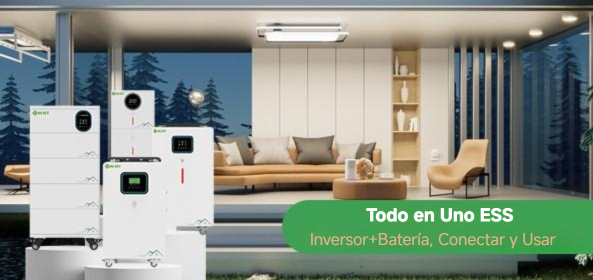
PV generates the electricity. The battery stores it. The inverter handles conversion and control. The energy management system makes them work together. This is the shift taking place across the industry.
Beyond the energy crisis: what we really need is energy resilience
Energy crises eventually pass. Natural gas prices rise and fall. Electricity prices change, and national energy policies continue to evolve.
If we install solar and storage only in response to a particular price spike, we may be underestimating the system’s long-term value.
As an engineer, I believe the more important concept is energy resilience: the ability of a household, shop, farm, or business to retain some control over how it manages energy when external conditions change.
That is the lasting value of solar-plus-storage.
At SUMT, our aim is not simply to sell an inverter. Through HS1, HC1, HS3, and our other storage product platforms, we want to help partners, installers, and end users design systems that suit the energy conditions they actually face in their local markets.
After repeated upheavals in energy markets, one thing has become increasingly clear: a truly reliable energy system is not one that never encounters change. It is one that still gives you options when change arrives.
Technical note: This article discusses renewable energy and storage system applications; it does not constitute system design advice for a specific project. Electricity pricing policies, grid-connection rules, climate, grid quality, and load profiles vary by region. For PV input ranges, battery compatibility, generator interfaces, parallel operation capability, protection ratings, and other technical parameters of individual SUMT models, please consult the latest datasheets and technical documentation for the relevant product.
Energy Security and the Green Transition Why Solar and Storage Are Becoming a Long Term Choice for More Homes and Businesses
After the Solar Boom, What Comes Next?