How to Choose the Right Hybrid Storage Inverter for Home Use
As residential solar and storage systems become more common, more users are asking how to choose a hybrid storage inverter that truly fits their home. Faced with different brands, power ratings, and functions, many users focus mainly on price while overlooking the central role of the inverter in the whole storage system.
From an engineering design perspective, a hybrid storage inverter does far more than convert AC and DC power. It also manages PV generation, controls battery charge and discharge, dispatches energy, protects the system, and enables intelligent monitoring. Its performance and control strategy directly affect operating efficiency, power stability, and future maintenance cost.
For residential users, selecting the right inverter should not be based only on rated power. It should be evaluated together with household electricity habits, PV system size, battery capacity, and future expansion plans.
1. Understand the Actual Household Electricity Demand
Before selecting an inverter, the first step is to understand the home's real daily electricity use. The following key parameters should be reviewed:
• Average daily electricity consumption (kWh)
• Maximum instantaneous load power (kW)
• Whether high-power equipment such as air conditioners, electric water heaters, or induction cookers is used
• Whether backup power is required during outages
• Whether EV charging equipment may be added in the future
• Whether the solar system may be expanded later
These data determine not only inverter capacity, but also battery configuration and the overall operating strategy. A typical family home differs greatly from a villa with central air conditioning, pool equipment, or a home office system, so the system design should also be different.
2. Choose the Appropriate Inverter Power
Inverter power is not simply the larger the better. If capacity is too small, the system may limit loads or trigger protection under high-load conditions. If capacity is too large, initial investment increases and operating efficiency may drop under some conditions.
Engineering design usually recommends reserving a reasonable power margin based on peak household load and future expansion needs, rather than pursuing higher power alone. Homes planning to add batteries, PV modules, or EV chargers can prioritize products that support parallel expansion or modular upgrades.
3. Pay Attention to MPPT Performance
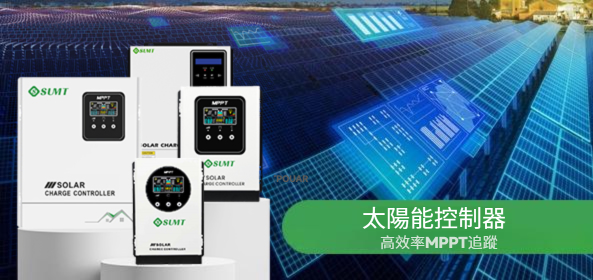
MPPT, or Maximum Power Point Tracking, is one of the key functions of a hybrid inverter. A dual-MPPT design can adapt to PV arrays with different orientations or tilt angles. Under partial shading or complex roof conditions, it helps improve the overall generation efficiency of the PV system.
For homes with more complex installation conditions, proper use of MPPT improves the system's adaptability to different sunlight conditions.
4. Battery Compatibility Is Equally Important
Most residential storage systems currently use LiFePO4 batteries, but communication protocols and control logic can differ between brands. During project design, it is important to confirm whether the inverter supports the required battery communication method, such as CAN or RS485, and to configure the system according to the compatibility list.
Good communication compatibility helps achieve more accurate SOC management, battery protection, and operating monitoring.
5. Intelligent Monitoring Improves Operation and Maintenance
Modern home storage systems are usually equipped with remote monitoring platforms. Users can view:
• PV generation
• Battery status
• Household load
• Utility grid status
• Historical operating data
• Alarm information
For installers, remote monitoring also supports system maintenance and technical support, improving after-sales service efficiency.
6. Consider the Installation Environment
Installation environments vary greatly from home to home. Common locations include indoor equipment rooms, underground garages, outdoor equipment platforms, balconies, and gardens.
For outdoor projects, attention should be paid to protection rating, dustproof and waterproof performance, and heat dissipation design. Choosing a product suitable for the installation environment helps improve long-term reliability.
7. SUMT Home Hybrid Storage Solutions
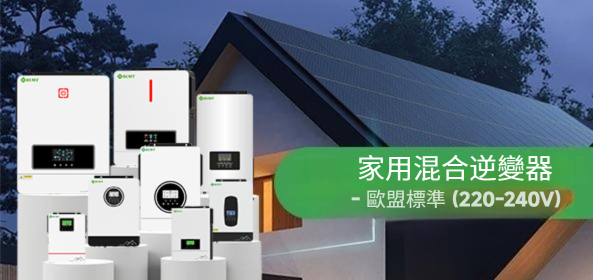
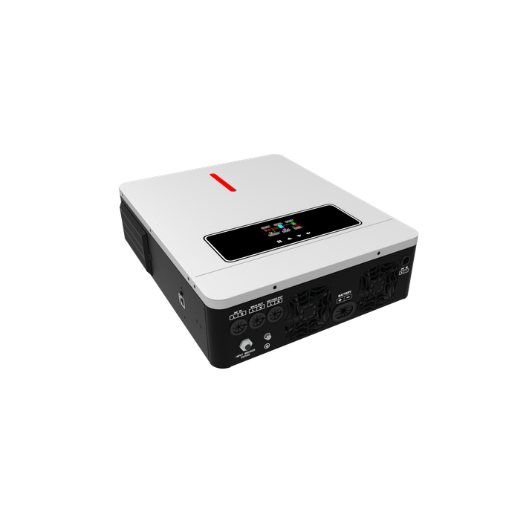
SUMT provides multiple hybrid storage inverter products for different residential application needs. The HS1 Series is designed for indoor installation and supports dual MPPT, intelligent battery management, remote monitoring, and fast UPS switching, making it suitable for ordinary homes and villa projects.
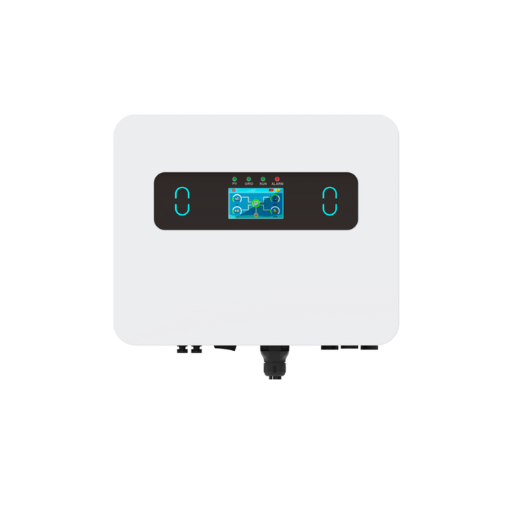
The HC1 Series adopts an IP65 protection design and is better suited for outdoor installation. It offers stronger environmental adaptability in areas with high temperature, high humidity, or heavy dust.
Specific product models and system configurations should be evaluated comprehensively according to household demand, PV scale, and installation conditions, with reference to the corresponding technical documents.
Conclusion
Choosing a hybrid storage inverter is essentially choosing the control platform of the entire home energy system. Proper equipment selection, scientific system design, and standardized installation and commissioning are the foundation for long-term stable operation.
For home users, it is recommended to fully evaluate electricity demand, installation environment, and future expansion plans at the beginning of the project, and to work with a professional technical team to develop a storage solution suited to actual needs.
SUMT will continue focusing on the research and development of hybrid storage inverters and home energy storage systems, providing safer, smarter, and more reliable energy management products for users worldwide and helping families move toward a more efficient and sustainable green-energy lifestyle.
Home Energy Storage Is Entering the Smart Era
Off-Grid Solar Inverter Market Sees Rapid Growth, Leading the Way in Green Energy Solutions
Related Article